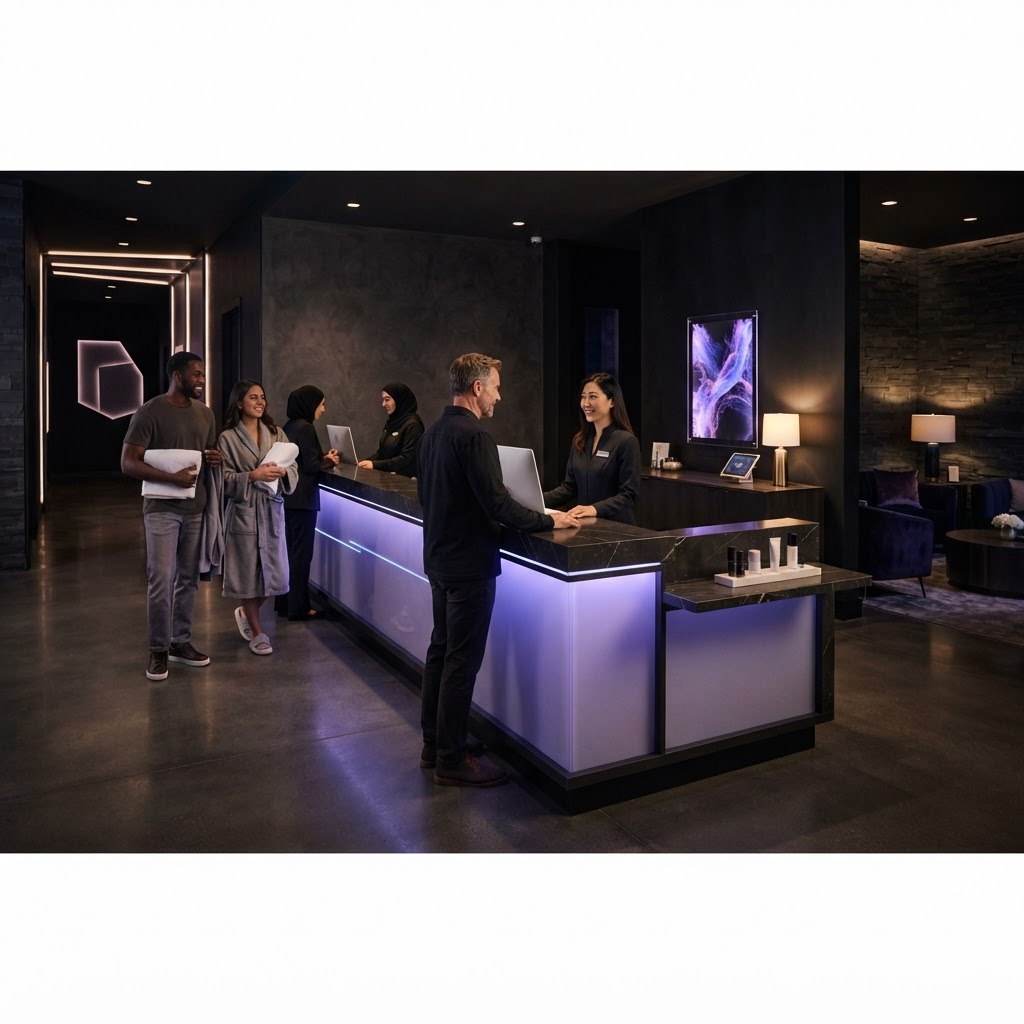
The 2026 ‘Lead-to-Chair’ Protocol: How Dental Practices Are Using Conversational AI to Stop the 4-Hour Response Leak
Stop losing patients to the 4-hour response gap. Learn how the 2026 'Lead-to-Chair' protocol uses conversational AI to convert dental leads in under 60 seconds.

The 2026 Reality: Why 4-hour response times are killing your dental practice growth
In the high-stakes world of modern dentistry, the patient journey doesn't begin in the operatory—it begins the moment a potential patient searches for a provider. By 2026, the landscape of dental practice marketing automation has shifted from a luxury to a survival mechanism. Yet, despite sophisticated ad campaigns and high-intent SEO, most practices are suffering from a silent, lethal hemorrhage: the 4.5-hour response gap.
When a patient reaches out via a web form, Facebook message, or a missed phone call, they are in a state of immediate need. If your team takes hours to respond, you aren't just being slow; you are effectively handing that patient to the competitor who answers in seconds. In an era where convenience is the primary currency, the 4-hour response time is no longer a minor operational inefficiency—it is a growth-killing bottleneck.
The 'Lead-to-Chair' Leak: Quantifying the revenue lost to slow follow-up
The math behind the 'Lead-to-Chair' leak is sobering. Research indicates that the average dental practice misses 30–40% of incoming calls, and only 14% of those callers bother to leave a voicemail. The rest simply hang up and dial the next practice on their Google search results. With each missed new patient call representing $250–$350 in immediate production and a lifetime value (LTV) reaching into the thousands, the annual revenue loss for a typical practice can easily exceed $100,000.
This is where dental lead conversion strategies must evolve. When you rely on manual follow-up, your front desk is forced to juggle patient check-ins, insurance verification, and clinical support, making it impossible to maintain a sub-5-minute response time consistently. This operational friction is the primary cause of the leaky bucket syndrome.
Beyond Online Booking: Why static forms fail to convert high-intent patients
Static contact forms are relics of the early 2010s. Today’s patients expect a conversational experience. When a patient fills out a form, they want an immediate acknowledgment, not an automated email saying, "We will get back to you within 24-48 hours."
High-intent patients—those looking for implants, Invisalign, or emergency care—are rarely willing to wait. They want to know if you take their insurance, if you have availability this week, and what the process looks like. If your website doesn't provide this through an interactive, AI-driven interface, you are losing the conversion before the conversation even starts.
The 60-Second Advantage: How conversational AI captures leads before they call a competitor
The 60-second advantage is the new gold standard for dental patient acquisition 2026. By deploying conversational AI, practices can bridge the gap between interest and action. Tools like Lyca Sells allow practices to automate the initial engagement, ensuring that every lead—whether from a missed call or a web inquiry—receives an immediate, personalized text response.
This isn't about replacing your front desk; it's about empowering them. By having an AI agent handle the initial qualification and scheduling, your staff is freed from the repetitive "Are you open?" and "Do you take my insurance?" questions. The AI handles the heavy lifting, ensuring that by the time a human staff member steps in, the patient is already primed and ready to book.
Multi-Channel Mastery: Integrating Facebook, Instagram, and missed-call recovery into one flow
Modern automated dental lead follow-up requires a unified approach. Your leads are scattered across platforms: a DM on Instagram, a comment on a Facebook ad, and a missed call on your office line. If these channels aren't integrated into a single, cohesive CRM, you are guaranteed to lose data.
Lyca Sells centralizes these interactions, creating a seamless flow where every touchpoint is tracked. When a call is missed, the system automatically triggers a text-back sequence, inviting the patient to continue the conversation via SMS. This multi-channel mastery ensures that no matter where a patient finds you, the experience is consistent, professional, and lightning-fast.
Case Study: How a mid-sized practice recovered 15+ lost leads per month with AI
Consider a mid-sized practice that was struggling with a 35% missed-call rate. By implementing an AI-driven response system, they didn't just stop the bleeding; they turned their missed calls into a revenue engine. Within 30 days, they were recovering 15+ leads per month that would have otherwise gone to competitors. By automating the follow-up, they increased their booked-appointment rate from 8% to 22%, effectively doubling their ROI on existing ad spend without increasing their marketing budget by a single dollar.
Implementation Roadmap: Moving from manual follow-up to automated patient intake
Transitioning to an automated system doesn't have to be a massive overhaul. Follow this roadmap to modernize your practice:
- Audit your current response time: Track how long it takes to respond to a web lead or return a missed call.
- Deploy AI for missed-call recovery: Ensure every missed call triggers an immediate, helpful text message.
- Integrate your lead sources: Connect your Facebook, Instagram, and website chat to a centralized CRM.
- Train your team: Shift your front desk's focus from manual data entry to high-value patient relationship management.
Measuring Success: The KPIs that actually matter for dental marketing automation
To truly master dental practice growth strategies, you must track the right metrics. Forget vanity metrics like "likes" or "impressions." Focus on:
- Lead Response Time: Aim for under 60 seconds.
- Call Answer Rate: Monitor how many calls are handled by your team vs. your AI.
- Lead-to-Appointment Conversion Rate: The percentage of inquiries that result in a scheduled chair time.
- Cost Per Booked Appointment: The true measure of your marketing efficiency.
Conclusion: Future-proofing your practice with the 'Lead-to-Chair' protocol
The 2026 'Lead-to-Chair' protocol is about one thing: respect for the patient's time. By eliminating the 4-hour response gap, you aren't just optimizing your operations; you are building a reputation for reliability and care. In a competitive market, the practice that responds first is the practice that wins. Don't let your marketing dollars go to waste by letting leads slip through the cracks. Ready to see how your practice stacks up? Take our 2-minute assessment to identify your current lead leakage and start your journey toward automated growth.
Ready to stop leaking leads?
Lyca answers every web chat, DM, and missed call in under 60 seconds — for $97/mo.
Hire Lyca Today